
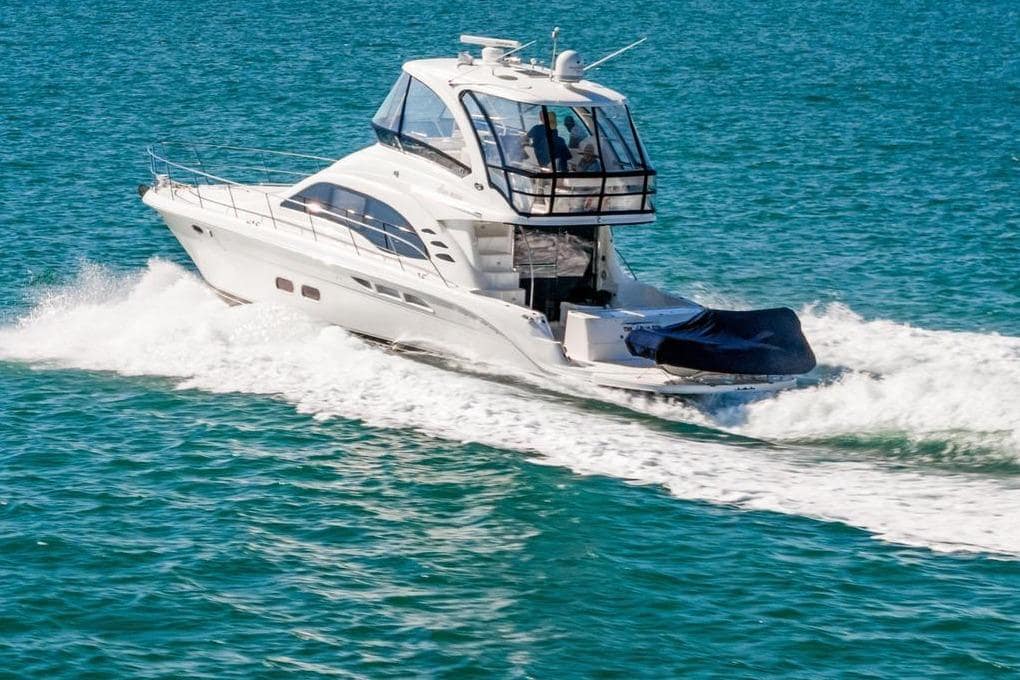
A turning point for the boating industry
By Justin Alexander, CEO – Yacht Master Inc.
The Canadian government’s November 4, 2025 federal budget announcement marked a pivotal moment for the boating industry. In a move that reshapes the high-end marine market, Ottawa declared the elimination of the federal Luxury Tax on vessels and aircraft, effective November 5, 2025.
For years, this tax—implemented under the Select Luxury Items Tax Act (SLITA)—added a significant financial burden to yacht buyers, sellers, and manufacturers across the country. Its removal represents not only a relief for boat owners but also a revival opportunity for Canadian shipyards, dealers, and brokers navigating a post-pandemic correction.
At Yacht Master Inc., we’ve analyzed how this policy change will influence yacht values, market behavior, and investment strategies heading into 2026. Under the direction of CEO Justin Alexander, our team continues to help clients adapt to shifting economic tides with precision and experience.
1. What happened on November 4, 2025
The 2025 Federal Budget announced the end of the Luxury Tax for “subject vessels” — namely, recreational boats valued above CAD 250,000 — as well as for “subject aircraft.”
Starting November 5, 2025, any sale, import, or major improvement of a qualifying vessel will no longer be subject to this federal tax.
Key highlights:
- Vendors registered under the SLITA must file a final return covering the period that includes November 4, 2025.
- No future filings will be required for yachts or aircraft.
- All related registrations will be automatically canceled by February 1, 2028.
- The tax remains in effect only for luxury vehicles such as cars, not for boats or planes.
This policy shift, long requested by industry groups, recognizes the economic value of the recreational marine sector—an industry that supports thousands of skilled jobs across Canada’s coastal and inland regions.
2. Why this matters for the yacht industry
2.1 Removal of a major fiscal barrier
Before November 2025, any vessel priced above CAD 250,000 was subject to the lesser of 10% of its total value or 20% of the amount exceeding the threshold.
That cost stacked on top of GST/HST and other provincial fees, making Canada less competitive internationally.
The removal of this tax reduces acquisition costs significantly, making Canadian-registered yachts more attractive to both local and foreign buyers.
2.2 A revival for the premium segment
Between 2022 and 2024, the Luxury Tax dampened activity in the upper market. Many buyers redirected purchases through U.S. jurisdictions or offshore registrations to avoid the surcharge.
With this change, the Canadian luxury yacht segment regains its competitiveness, potentially reversing that capital flight.
As CEO Justin Alexander explains:
“This is more than a fiscal adjustment. It’s a restoration of balance in the market. Canada can now compete again as a place to buy, register, and sell high-quality vessels.”
2.3 Positive spillover for the service economy
Beyond sales and brokerage, the change affects the entire ecosystem: refit yards, marine mechanics, photographers, surveyors, and charter operators.
The Yacht Master Inc. team expects increased activity across all service tiers, as more yachts re-enter circulation and owners reinvest in upgrades or resale preparations.
3. Immediate implications for Canada and Québec
With headquarters in Montreal and operations across Ontario, British Columbia, and the Atlantic provinces, Yacht Master Inc. monitors these policy shifts closely.
3.1 Regional and provincial considerations
While the federal Luxury Tax is gone, provincial taxes still apply. Buyers and sellers must consider GST/HST, PST (in BC), or import duties depending on where the transaction occurs.
However, without the federal surcharge, total acquisition costs drop substantially — especially in Québec, where high-value boat imports often faced double taxation.
3.2 International buyers
For cross-border clients from the U.S. and Europe, this reform is a game-changer. Canada once again becomes a competitive purchasing hub, with lower effective costs and transparent import frameworks.
3.3 Market liquidity and turnover
Owners who delayed listing their yachts due to unfavorable tax conditions are now expected to re-enter the market.
That increased inventory can invigorate transactions, though it also raises competition — reinforcing the need for strong marketing, presentation, and accurate valuation.
4. The broader context: post-pandemic correction
The pandemic years of 2020 and 2021 triggered the biggest yacht sales boom in history. Over one million used boats changed hands in 2021 alone, and new powerboat sales over 25 feet surpassed 300,000 units.
However, by 2023–2024, the surge had receded. Rising interest rates, inflation, and oversupply led to a market correction. Many “pandemic boats” are now five years old — a traditional turnover milestone — adding further inventory to an already crowded field.
The Luxury Tax repeal arrives at precisely the right moment, offering the industry renewed breathing room and buyers a reason to return.
4.1 New yacht production
Manufacturers continue to face high material and logistics costs, but the absence of the tax will allow them to offer more attractive pricing for high-end models.
4.2 Pre-owned yacht market
The strongest short-term impact will occur in the pre-owned segment.
Yachts with solid maintenance records and professional presentation will move faster, while neglected or overpriced listings may stagnate.
4.3 The professional edge
For brokers, presentation now carries more weight than ever.
The Yacht Master Inc. team emphasizes thorough documentation, recent servicing, and high-quality photography as critical to standing out.
“In 2026, the boats that sell will be the ones that tell a clear, documented story.”
5. Market outlook for 2026
Combining national data, NMMA forecasts, and internal market analytics, Yacht Master Inc. projects several key trends heading into 2026:
5.1 Gradual demand recovery
Expect a steady but not explosive return of buyers throughout 2026–2027. The repeal removes friction, but economic caution persists among investors.
5.2 Price stabilization in the mid-high segment
Boats priced between CAD 150,000 and CAD 500,000 will likely maintain or slightly increase in value. The upper-luxury segment (CAD 1M+) could see renewed appreciation, especially for late-model vessels in pristine condition.
5.3 Digital-first marketing dominance
As competition intensifies, digital presentation becomes the main differentiator.
Professional HDR photography, aerial drone footage, and virtual tours are now essential, not optional.
At Yacht Master Inc., these visual standards are already embedded in every listing strategy.
5.4 New buyer demographics
A younger generation is entering the market—tech-savvy, environmentally conscious, and focused on ease of ownership.
Demand for hybrid and electric yachts, as well as simplified management solutions, is set to grow.
5.5 Global integration and cross-border deals
With the tax barrier removed, expect a rise in Canada–U.S. cross-border transactions. Brokers who can navigate customs, escrow, and registration processes will gain a competitive edge.
6. Practical guidance for 2025–2026
For yacht sellers
- Capitalize on the tax change: promote your yacht as “Luxury Tax Exempt” to attract high-end buyers.
- Refresh your presentation: detailed maintenance records, upgrades, and professional imagery now matter more than ever.
- Set realistic expectations: the market remains competitive; pricing accuracy is key.
- Plan your listing window: the first and second quarters of 2026 are expected to offer peak visibility.
For yacht buyers
- Confirm updated pricing: ensure the elimination of the Luxury Tax is reflected in any quotation or invoice.
- Inspect carefully: with more used inventory available, quality varies widely.
- Negotiate strategically: lower tax liability strengthens your position to close faster.
- Consider importing: U.S.-based yachts may now be more cost-effective to register in Canada.
For industry professionals
- Educate your clients: awareness of the repeal builds trust and confidence.
- Elevate your marketing: combine SEO, video, and virtual experiences to reach global audiences.
- Expand partnerships: international co-brokerage and referral networks will become even more valuable.
7. Canada vs. the United States: shifting competitiveness
Unlike Canada, the United States has no federal luxury tax on yachts, but relies on a mix of state-level sales and use taxes. Rates and exemptions vary widely — from 0% in Delaware to over 7% in Florida.
Now, with Ottawa lifting its federal surcharge, the gap narrows considerably.
For international buyers, Canada regains parity with the U.S. as a viable, transparent, and secure place to purchase and register high-end yachts.
This opens opportunities for domestic brokers to attract cross-border clients who previously bypassed Canadian listings.
8. A signal of confidence in the marine industry
Removing the Luxury Tax is not only a fiscal adjustment; it’s a statement of confidence in Canada’s recreational marine economy.
The government’s decision acknowledges the industry’s contribution to tourism, employment, and trade. It encourages innovation — from cleaner propulsion systems to sustainable marina infrastructure.
As Justin Alexander puts it:
“This change restores balance and credibility. It rewards the builders, brokers, and clients who believe in the long-term potential of the Canadian boating sector.”
The Yacht Master Inc. team echoes this sentiment: the coming years will favor those who adapt quickly, maintain professionalism, and focus on long-term client relationships rather than short-term gains.
9. Looking ahead to 2026 and beyond
By mid-2026, Canada’s yacht market will be defined by three major dynamics:
- Renewed domestic confidence — more listings, more buyers, and stronger dealer networks.
- Cross-border synergy — smoother Canada–U.S. trade in both directions.
- Quality differentiation — presentation, maintenance, and transparency will outweigh mere price competition.
For Yacht Master Inc., these shifts reaffirm our mission: to deliver excellence, trust, and expertise in every transaction — from 30-foot cruisers to world-class motor yachts.
10. Final thoughts
The November 4, 2025 decision to remove Canada’s Luxury Tax on yachts will reshape the market well into 2026 and beyond.
It’s a rare example of policy aligning with real-world industry needs — and a chance for the marine sector to rebuild stronger foundations after years of volatility.
At Yacht Master Inc., we see this not as an end, but as a new beginning.
A time for innovation, collaboration, and renewed confidence on the water.
Whether you’re preparing to sell, ready to buy, or exploring partnership opportunities, our team is here to guide you through this evolving landscape — with the same professionalism and global perspective that define Yacht Master Inc.
Yacht Master Inc.
Global Yacht Brokerage & Marine Advisory Services